
- Role
- Senior Product Designer, leading the initiative
- Client
- Realize
- Year
- 2024
- Areas
- Product design, Automation
Context
Realize materials are used by institutions with their own visual identities. Every client wanted to see their own brand in the courses.
The problem
Adapting each client's identity, one material at a time, does not scale, and every manual tweak opens room for inconsistency.
- 01
Applying logo, colors and fonts meant manual work on every material.
- 02
There was no way to see the result before publishing.
- 03
With a lot of content, keeping it consistent was hard.
How I solved it[03]
- 01
The theme as a single source
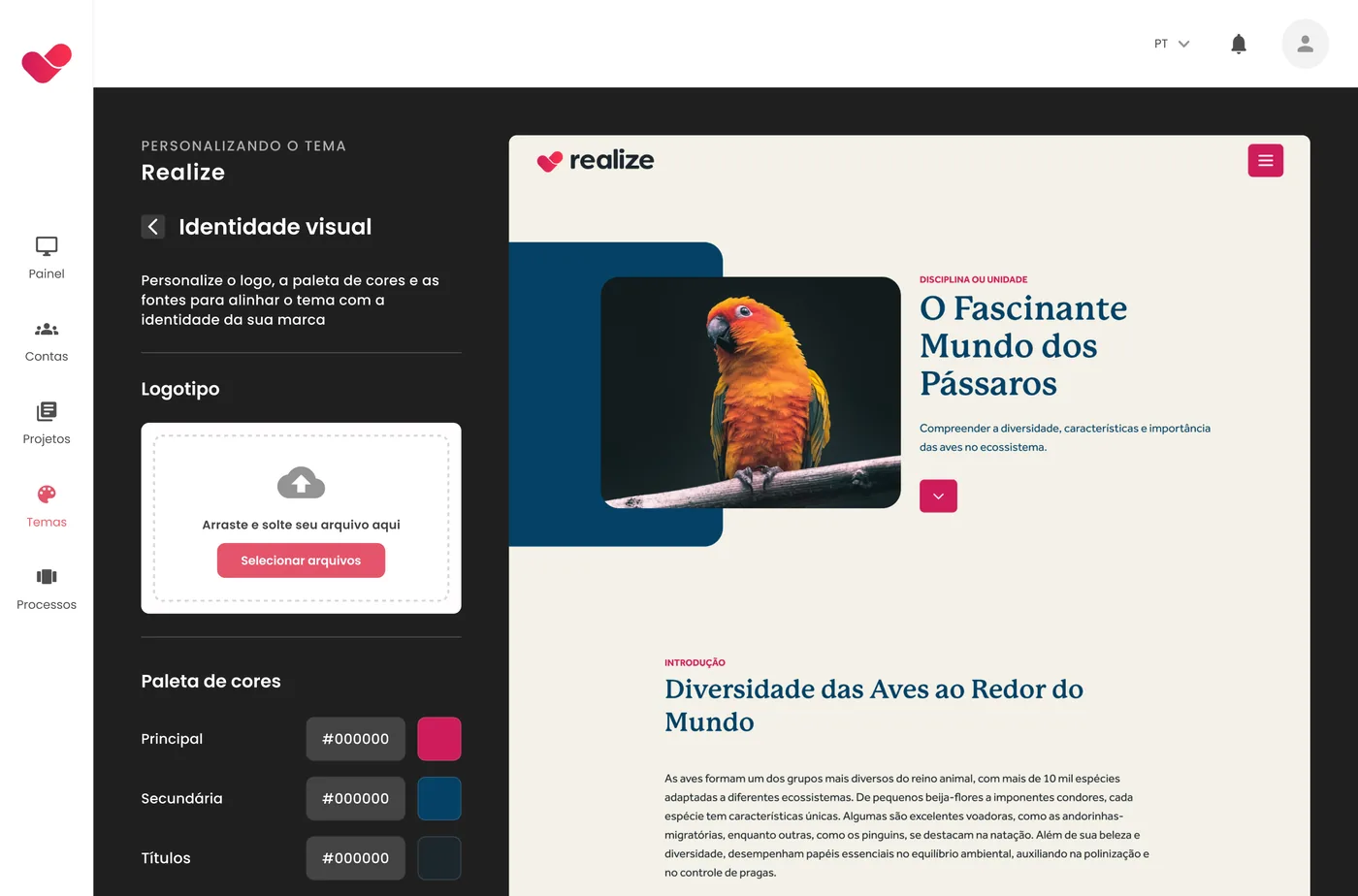
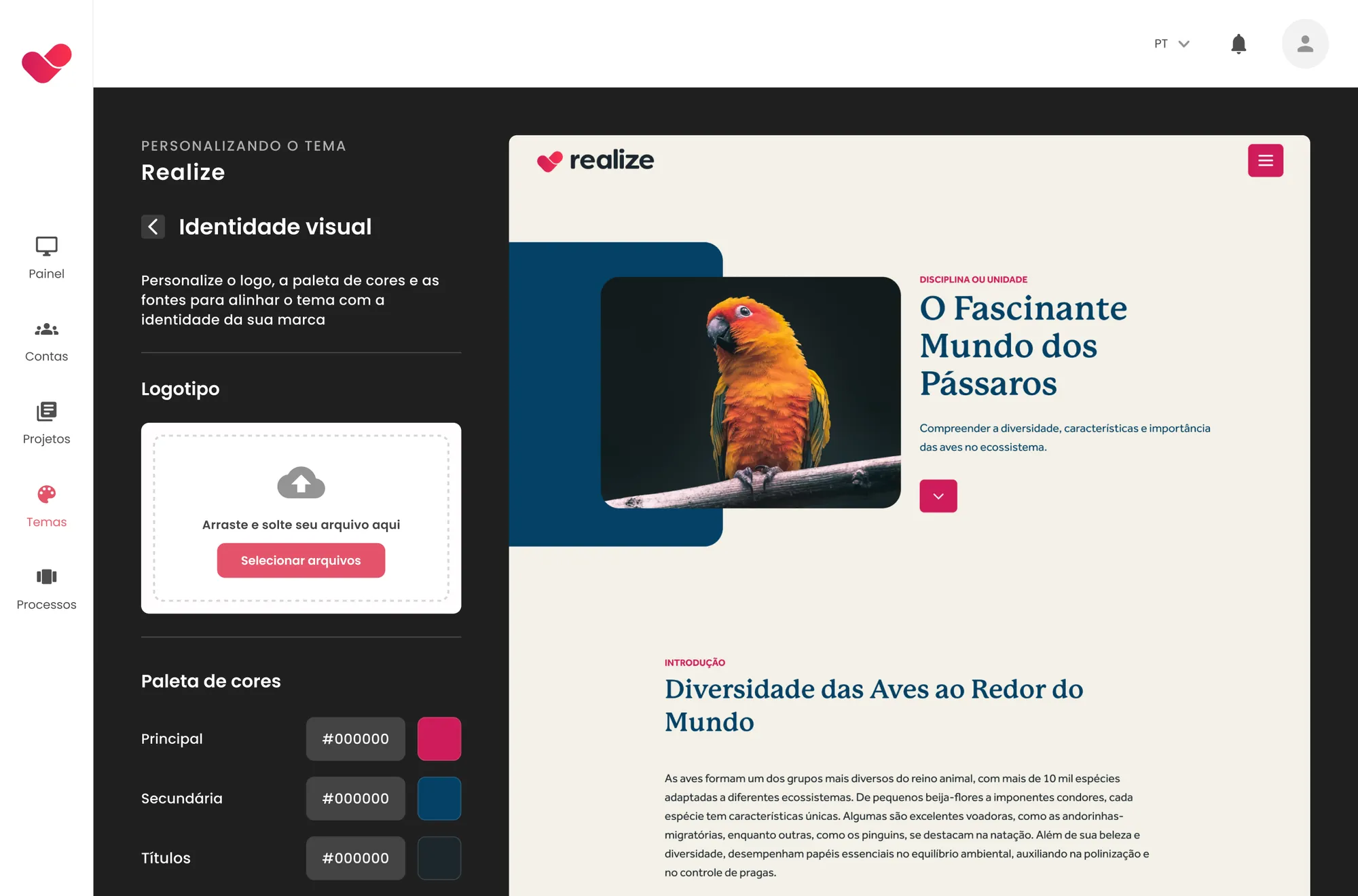
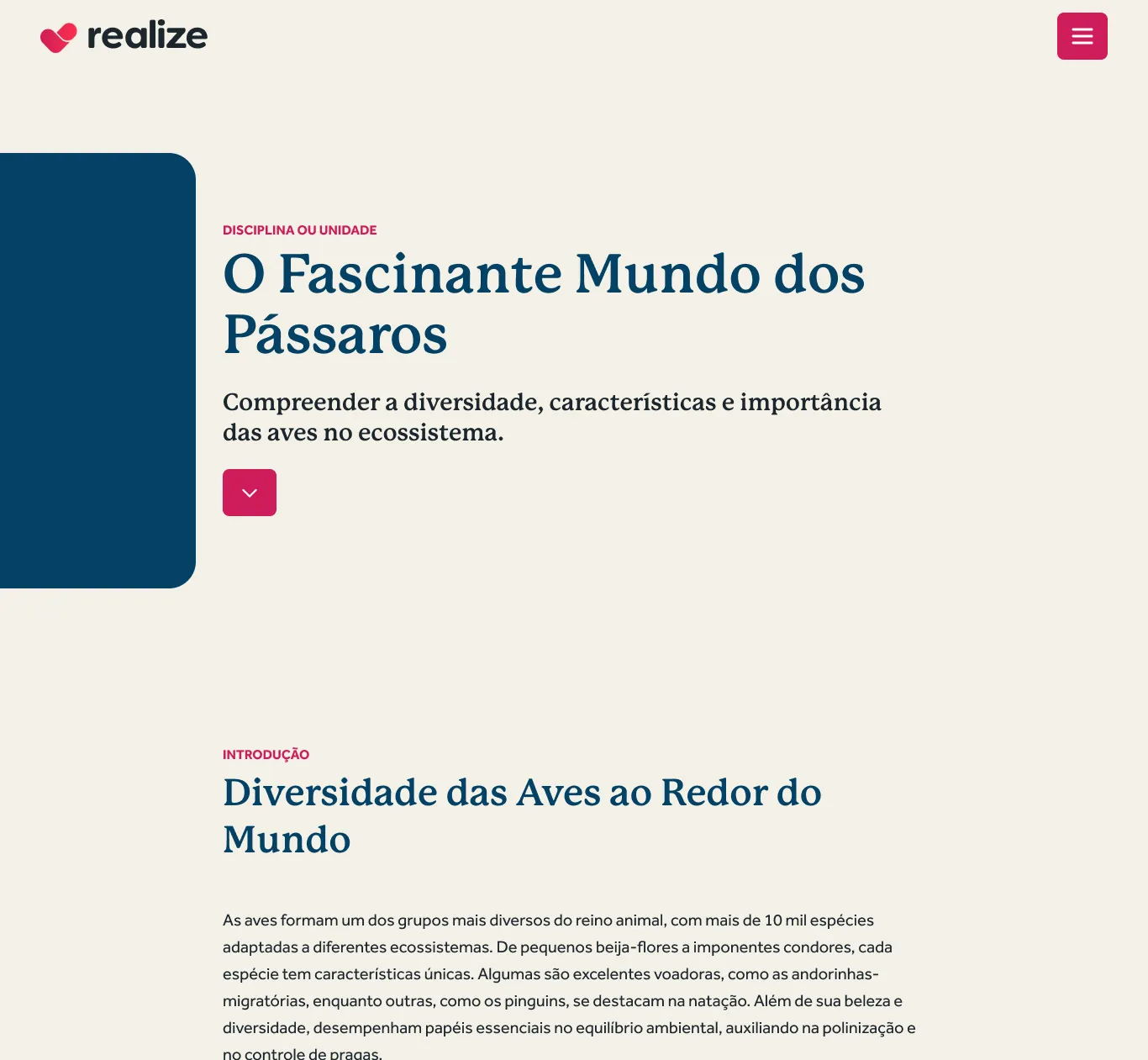
Logo, palette (primary, secondary and headings) and fonts become a theme. It is set once and applied to all of that client's materials.
- 02
Edit while seeing the result
The editor sits next to a real preview of the material, which updates instantly. Decisions are made looking at the content, not at loose values.
- 03
Few choices, the right ones
Instead of opening every style, the theme exposes only what changes how the brand is perceived. The rest follows the design system, which keeps readability and consistency.
Screens[02]
Outcome
A feature with a direct impact on the platform's sales growth.
Visual identity applied at scale, with no manual rework for each material.
What I learned
Good customization is limited on purpose. Fewer controls, but the right ones, protect both the client's brand and the quality of the material.
Next project
AI-powered learning materials at scale
Realize · 2025